 By nDir
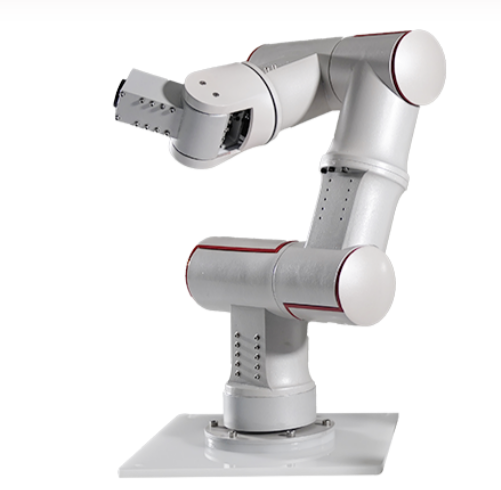
When manufacturers evaluate industrial automation, much of their attention goes to the robotic arm. Reach, payload capacity, repeatability and movement speed are important specifications, but they do not determine whether a robot can successfully manipulate a particular object. The end effector, which is the device attached to the robot’s wrist, creates the physical interaction between the machine and the workpiece. Its design can determine whether an automated process is reliable, adaptable and economically viable.
The End Effector Defines What a Robot Can Actually Do
A robotic arm provides movement, but the end effector performs the operation that gives the movement practical value. Depending on the application, it may grip a component, create a vacuum seal, tighten a fastener, dispense material or carry out another specialised task. A robot with excellent positioning accuracy may still fail if its tool cannot maintain a secure grip or accommodate variations in the workpiece.
Consider a production line handling thin plastic containers. A mechanical gripper applying excessive force could deform the containers, while insufficient force might allow them to slip during acceleration. A vacuum-based solution may offer an alternative, provided the container geometry, surface characteristics and available suction area support reliable handling. The appropriate choice depends on the workpiece and process rather than the robot’s specifications alone.
Gripping Force, Contact Geometry and Material Properties
Selecting a gripper involves more than matching its maximum force to the weight of an object. Engineers must also consider friction, contact area, centre of gravity, acceleration and the direction in which the object will be moved. A component that remains secure during a slow vertical lift may become unstable when the robot changes direction rapidly.
Material properties introduce further constraints. Polished metal surfaces, porous packaging materials, flexible films and delicate electronic components respond differently to mechanical and vacuum gripping. Surface contamination, moisture and dimensional variation can also affect gripping reliability. For this reason, testing should include representative production conditions rather than only ideal laboratory samples.
Why Tool Weight Affects Robot Performance
An end effector consumes part of the robot’s available payload capacity. A robot rated for a particular maximum payload cannot necessarily carry a workpiece of that weight once the gripper, mounting hardware and other tooling are included. The load’s centre of gravity and inertia also matter because they influence the forces and torques experienced by the robot’s joints.
Heavy tooling can limit acceleration, increase mechanical loading and reduce the range of suitable applications. Lightweight end effectors may improve the usable payload margin, although reducing tool mass should not compromise structural rigidity or gripping performance. The complete load configuration must remain within the robot manufacturer’s specified limits.
Tool Integration Is Part of the Automation Design
Mechanical compatibility is only one requirement when connecting an end effector to a robot. The tool may also need electrical power, compressed air, vacuum generation, digital signals or communication through an industrial network. Integrating these functions determines how effectively the robot can monitor and control the gripping process.
Manufacturers such as Onrobot develop robotic end-of-arm tooling for applications involving gripping and other workpiece-handling operations. In practical integration projects, the relevant questions concern the tool’s compatibility with the robot controller, available feedback signals and suitability for the intended production environment. A gripper that can report its operating status may support more effective fault detection than one controlled solely through a basic open-and-close command.
Tool communication also affects commissioning. Engineers need to establish how the robot confirms that a workpiece has been secured before beginning the next movement. Without reliable confirmation, a failed grasp can cause downstream problems, including missing components, machine interruptions and damaged products.
When Automatic Tool Changing Makes Sense
Some production environments require a robot to perform several operations using different tools. A robot might first handle an unfinished component, then switch to a processing tool before transferring the completed part to another station. Automatic tool changers can support this flexibility by allowing one robotic arm to use multiple end effectors.
However, tool changing introduces additional equipment, control logic and maintenance requirements. The system must verify that each tool is correctly connected and that the necessary utilities and communication interfaces are available. For high-volume production involving a single repetitive operation, a dedicated tool may be simpler and more economical. Automatic changing becomes more attractive when product variation or the required sequence of operations justifies the additional complexity.
Evaluating the Complete Robot-and-Tool System
The performance of an automated workstation should be assessed as a complete system rather than as a collection of independently specified components. A fast robot paired with an unreliable gripper may achieve lower practical throughput than a slower robot with consistently successful handling. Similarly, an expensive robotic arm may be unnecessary if the application can be performed using a simpler machine and a well-designed end effector.
Before finalising an automation project, manufacturers should test representative workpieces, including those near the limits of acceptable dimensional variation. They should also evaluate grip stability, tool maintenance, recovery after failed operations and compatibility with future product changes. These factors help reveal problems that may not be apparent from equipment specifications.
The end effector is not merely an accessory attached to a robotic arm. It determines how robotic motion becomes useful physical work and often sets the practical limits of the application. Selecting the right tooling early in the engineering process can prevent costly compromises in robot selection, cycle time and production reliability.